On this page
Every training team meets this question sooner or later: do we buy a ready-made course, or build one for ourselves? The answer is rarely “always one or the other.” It depends on how much of the course is your content. This guide gives seven questions to decide, a rule of thumb, and a hybrid approach for the cases in between.
Disclosure: Cyberwisdom builds custom courseware and also supplies an LMS that runs courses from any source. We have written this guide to help you decide, including when a bought course is the better choice.
The two options defined
Off-the-shelf e-learning is a ready-made course on a general topic, produced by a content provider and licensed to many organizations. You can start almost immediately, and the cost is shared across all the customers of the provider.
Custom e-learning is content designed and built around one organization’s own policies, products, systems and compliance obligations, rather than bought as a generic title. It is also called bespoke courseware.
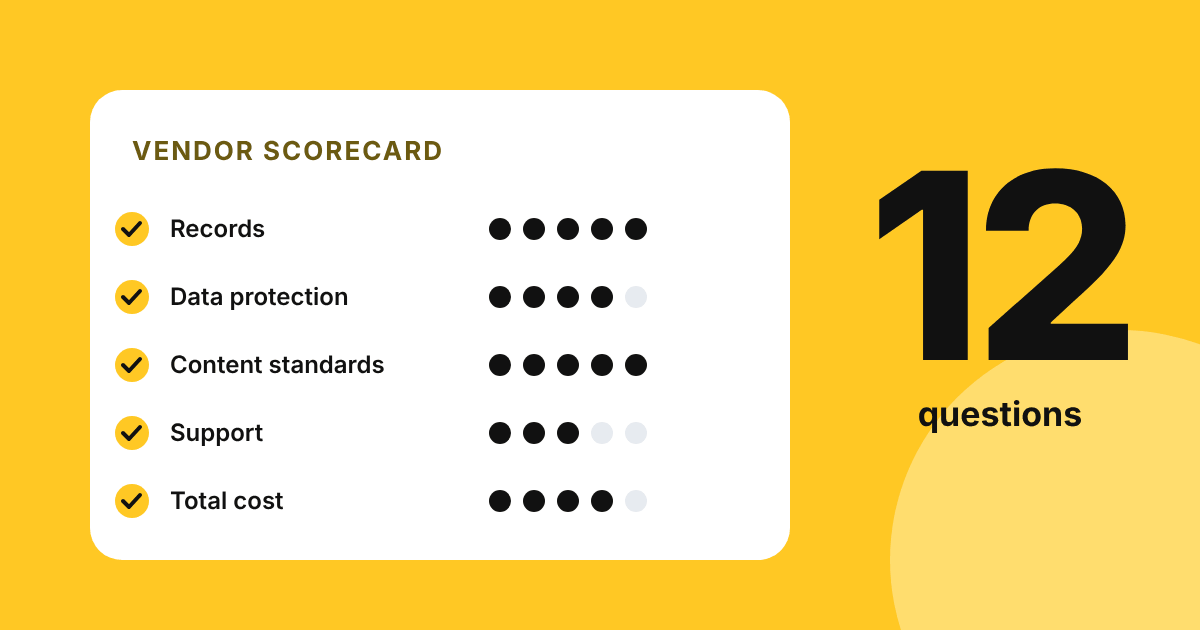
Seven questions to decide
| Question | Points towards buying | Points towards building |
|---|---|---|
| 1. Whose content is it? | General knowledge anyone can teach | Your own policies, procedures, products or systems |
| 2. Who is the audience? | A broad, mixed audience | A specific role, region or product team |
| 3. What happens if the course is slightly wrong? | Low risk: a general skills course | High risk: a compliance or safety procedure that staff must follow exactly |
| 4. How often does the content change? | Rarely, or the provider updates it | Often, and only you know when |
| 5. How soon do you need it? | Within days or weeks | You can allow time for design, review and sign-off |
| 6. Which languages do staff need? | The provider’s languages are enough | You need your own terms and examples in each language |
| 7. Does it need to look and sound like us? | Generic is fine | Brand, tone and real scenarios matter |
If most answers fall in the left column, buy. If most fall in the right, build. A mix usually means a hybrid.
A simple rule of thumb
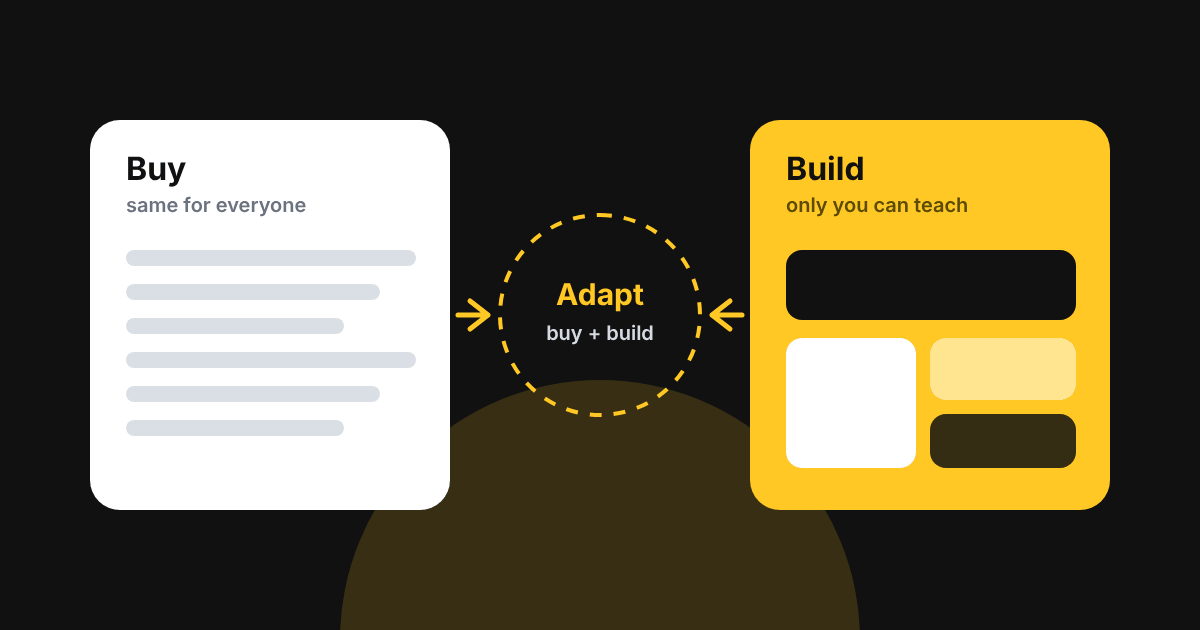
Buy what everybody teaches the same way. Build what only you can teach.
General skills such as using common office software, workplace safety basics or introductory management topics are the same in every organization, so a licensed course makes sense. How your firm onboards a new employee, handles a customer complaint, uses your internal systems or applies your anti-bribery policy is not in any provider’s catalogue, however large.
Where custom content earns its cost
- Policies and procedures. Staff need to learn what your policy says, in your terms, with decisions drawn from real situations they will face.
- Product and system training. Courses about your own products or software cannot be bought, because nobody else has them.
- Compliance and CPD. Training tied to your regulatory obligations and your own risk areas must match the rules and the evidence you need to keep. Cyberwisdom builds CPD courseware aligned to competency and performance requirements, with completion and assessment records reported back to your LMS.
- Multi-language audiences. Existing courses can be localized and translated so that staff in different regions learn from material in their own language.
The hybrid approach
Often the best answer is neither extreme.
- Buy the foundation, build the layer on top. Use a licensed course for general knowledge, then add a short custom module with your own policy, scenarios and assessment.
- Adapt a bought course. Where the licence allows, add your own examples, branding and language. Confirm the licence terms first.
- Start custom, then reuse. A custom course built around a storyboard can later be localized or updated, rather than rebuilt.
What a custom project involves
A good custom project starts with a storyboard, not with software. The instructional designers work with your subject matter experts to agree the learning outcomes and the structure before any course is built. Your reviewers sign off the storyboard, the course is built from it, and the finished course is delivered as a standard package. Ask any provider for the same sequence: what you will review, when, and who signs off.
Check the delivery format
Whichever route you take, the course must run in your LMS and report results back to it. SCORM is a set of technical specifications that lets browser-based e-learning content be shared, reused and tracked across different learning management systems. Cyberwisdom delivers custom courses as SCORM and AICC packages, so they run in UpLearn or in the learning management system your organization already operates. If you are still choosing a platform, see how to choose an LMS.
About Cyberwisdom’s courseware
Cyberwisdom is a Hong Kong provider of learning management systems, CPD compliance software and bespoke courseware, serving 800+ enterprise clients since 1999. It has delivered 3,000+ custom courses. See bespoke courseware for examples and the project approach.
Sources
Cyberwisdom Asia Ltd. is a Hong Kong provider of learning management systems, CPD compliance software and bespoke courseware, serving 800+ enterprise clients since 1999.
About Cyberwisdom