On this page
Hong Kong’s first cybersecurity law for critical infrastructure is now in force. The Protection of Critical Infrastructures (Computer Systems) Ordinance (Cap. 653) came into operation on 1 January 2026, the Commissioner’s Office opened the same day, and designation of critical infrastructure operators was expected to begin in mid-2026. Most commentary covers the fines and the reporting clock. This guide looks at the part that training and L&D teams will actually be asked to deliver: the people, competence and drill obligations inside the three categories, and how to evidence them.
Sources checked on 25 October 2026 against the Commissioner’s Office and the Legislative Council brief listed at the end. This is general information, not legal advice; if your organization may be designated, confirm the current requirements with the Commissioner’s Office or your designated authority.
The obligations, with their clocks
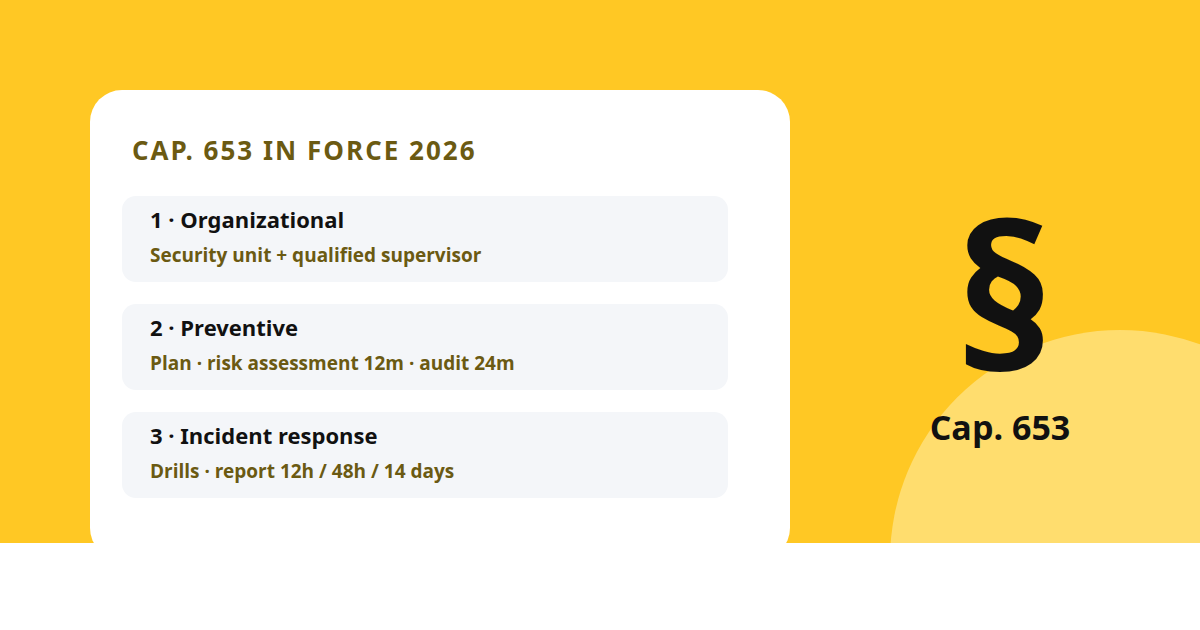
The Commissioner’s Office publishes the three categories with deadlines. The table below condenses them:
| Obligation | Deadline |
|---|---|
| Cat 1: Office in Hong Kong, operator-change notices | Within 1 month of designation or change |
| Cat 1: Security management unit with a qualified supervisor | Within 1 month of designation, or of a change of the supervising employee |
| Cat 2: Notify material changes to critical computer systems | Within 1 month |
| Cat 2: Submit and implement a security management plan | Within 3 months of designation; within 1 month of any revision |
| Cat 2: Security risk assessment | Within 12 months of designation, then at least every 12 months; report within 3 months of each assessment deadline |
| Cat 2: Independent security audit | Within 24 months of designation, then at least every 24 months |
| Cat 3: Participate in the Commissioner’s security drills | As notified in writing by the Commissioner |
| Cat 3: Emergency response plan | Within 3 months of designation; within 1 month of any revision |
| Cat 3: Report incidents | Serious incidents within 12 hours of becoming aware; others within 48 hours; written report within 14 days |
The Code of Practice, issued under section 8 of the Ordinance and effective from 1 January 2026, provides the practical detail on all three categories. The Hong Kong Monetary Authority and the Communications Authority act as designated authorities for their sectors, and the HKMA has issued sectoral codes for designated authorized institutions and stored value facility licensees. Non-compliance with the statutory obligations is a criminal offence; the Code itself is guidance, but failure to follow a written direction issued with reference to it is an offence.
Where people and training actually sit inside it
The Ordinance does not prescribe an annual training-hours number, and nothing here should be read as one. But three of its requirements are impossible to meet without trained people, and each leaves an evidence trail.
1. The supervising employee must be qualified
The security management unit must be supervised by an employee with adequate professional knowledge of computer-system security. The Code of Practice names recognized certifications such as CISP and CISA as evidence of that knowledge and links competence to experience commensurate with the risk profile of the systems. For the operator, this means a named person, a maintained qualification, and proof of both. Certifications expire; the record cannot.
2. The emergency response plan must be executable
An emergency response plan that staff have never rehearsed is a document, not a capability. When a serious incident has to be reported within 12 hours and a written report filed within 14 days, the people on the rota need to know their roles before the incident, not during it. That is tabletop exercises, role-based briefings and refresher sessions, with attendance and results recorded.
3. Drills are a regulatory event
Category 3 requires operators to participate in computer-system security drills as notified by the Commissioner. A drill is effectively a regulator-observed test of whether the people and the plan work together. Operators that treat internal exercises as a standing programme, rather than a one-off scramble before the Commissioner’s drill, are the ones that perform.
What non-designated organizations should take from it
The Commissioner’s Code of Practice is written for designated operators, but it is the clearest official statement of what Hong Kong now considers baseline cyber hygiene at the organizational level. For organizations outside the regime, it is a practical template: name a security owner, keep a living management plan, assess risk on a 12-month cycle, test the response plan, and keep the evidence. Several regulators’ existing expectations, such as the HKMA’s supervisory policy on technology risk, point in the same direction.
If your sector’s designated authority adopts the Code, or your organization sits in the supply chain of a designated operator, these expectations can reach you contractually even without a designation.
A readiness checklist
- Confirm whether you are likely to be designated, and in which sector, with which designated authority.
- Name the supervising employee and check their certification status and expiry dates.
- Map who executes the emergency response plan at 2am, and when each of them last rehearsed it.
- Set the 12-month risk assessment and 24-month audit cycles as recurring tracked activities, not calendar notes.
- Decide where drill participation, exercises and briefings are recorded, and what you would show the Commissioner afterwards.
- Treat the management plan and response plan as versioned documents with owners and review dates.
Where a system helps
The Ordinance’s deadlines are short, recurring and evidence-heavy, which is the shape of problem a learning and compliance platform exists for: role-based assignment of briefings and exercises, tracked completion, certification expiry reminders for the supervising employee, and a report that shows who was prepared before the drill, not after it. UpLearn, Cyberwisdom’s enterprise LMS, is built for exactly this kind of recurring, evidence-producing training, and our bespoke courseware team builds scenario-based modules around an organization’s own response plan. Cyberwisdom is a Hong Kong provider of learning management systems, CPD compliance software and bespoke courseware, serving 800+ enterprise clients since 1999.
Sources
- Office of the Commissioner of Critical Infrastructure (Computer-system Security): the three categories of statutory obligations
- Office of the Commissioner: Code of Practice
- Legislative Council Brief: PCICSO (Commencement) Notice (June 2025)
- Communications Authority: Protection of Critical Infrastructures (Computer Systems) Ordinance
Cyberwisdom Asia Ltd. is a Hong Kong provider of learning management systems, CPD compliance software and bespoke courseware, serving 800+ enterprise clients since 1999.
About Cyberwisdom